Are you dying to try your hand at starting your very own clothing line in 2021?
If so, I’ve got your back.
In this 15 steps to success plan, I’m going to break down all the things you need to know before you launch into your new business in the fashion industry.
I'm Ippei, your friendly neighborhood passive income and local lead generation specialist...
And I’m going to cover everything from how much startup capital is realistic, to how to create your own apparel tech pack.
Ready to get started?
Let’s do this.
How to Start a Clothing Line Business in 2021
Starting a Clothing Line This Year?
Are you dreaming of starting a clothing line? If you want this dream to become reality, you’re going to have to ask yourself some hard questions. To start a clothing line you need to find out how much money it will take, and how long before you can realistically see a return on your investment.
Clothing Line Start Up Costs Breakdown
While this list is not a comprehensive compilation of every you need to start your clothing line business, it provides a snapshot of what you need to add into your business plan.
If you just look at the costs, you're goin to have a very incomplete picture.
What kind of living could you actually make from starting a clothing line?
Here are the numbers:
Annual Profit Margins of Established Clothing Line Business:
According to Statista.com the average annual revenue of this kind of business is:
Now that you have a better feel for what your potential profit could look like, let's get on to that step by step guide.
Quick Start Step-By-Step Checklist:
1. Taking Your First Steps (Writing Your Business Plan)
Whether you’ve been doodling fashion designs in a notebook since you were twelve, or you just recently decided to funnel your creativity into starting a clothing line…
You have to be willing to take the first step.
When it comes to starting a business, you can spend years dreaming and scheming about what you’d like to do, but at some point you’re going to need to step out of your comfort zone and create a business plan.
The type of business plan that you’re going to need will depend on your goals.
If you’re simply trying to get your head on straight and create an actionable plan for yourself, you won’t need to include things like 10 year financial projections and market evaluations.
But if you’re going to need traditional small business financing in the form of an SBA loan from your bank, then be prepared to include things like this.
And also be prepared to write a business plan that is at least a dozen pages long!
For a more basic business plan, start by taking time to seriously think through your goals for your new clothing line.
How do you want your business to run?
What is your realistic amount of startup funding?
How long can you afford to work on your business before seeing an ROI?
These hard questions are invaluable.
It might be fun to dream of living your dream life as a clothing line designer and small business owner, but this is the time to be asking yourself the hard questions.
That way, when the going gets tough, you’ll be more prepared.
You’ll also want to include in your business plan the key points of starting and running your new clothing line:
Business Plan Checklist:
2. Getting Legal
I cannot stress to you enough the importance of getting your business legal before you start doing anything else.
So many people jump into starting their small business, and don’t give a second thought to the legal side and back end of what they’re doing.
This is a huge mistake.
Before you can make a single sale, or even properly brand yourself, you’re going to need to get legal.
There are really three main types of legal structures that you’ll be looking at.
3 Legal Structures:
If you’re not going into business with someone else, you can rule out number two.
Now it’s down to the Sole Proprietorship vs the LLC.
I personally would recommend going straight for the LLC.
While the Sole Proprietorship is the simplest to obtain, the LLC is the wisest.
It means that if things go south, you are not personally liable for the debts of your LLC.
This peace of mind is well worth the extra time and investment of getting your LLC.
The cost of obtaining your LLC will vary depending on your location, but you can expect it to fall into this range:
You’ll also need to register for your EIN number, but this is free!
Registering for your EIN is an important step, because it will be helpful for placing wholesale orders from suppliers.

Because of the creative nature of clothing design, I also highly recommend looking into getting a trademark for your brand and designs.
The aspects of clothing designs that can be trademarked varies, since it is an item of utility, but there are certain aspects of your brand that you can protect under a trademark.
Here is a helpful article if you’re interested in trademarking for your new clothing line: https://www.gerbenlaw.com/blog/5-things-to-know-about-trademarking-a-clothing-brand/
3. Money
Let’s face it…
Money is potentially one of the biggest things holding you back from starting your own business.
Although starting your own clothing line isn’t the most expensive endeavor you could take on, it definitely isn’t the cheapest either.
So let’s break down how much money you’re going to be looking at needing, and the potential ways you could go about obtaining funding for your new business idea.
Unless you’re interested in just throwing a couple designs on some t-shirts and selling them via drop shipping or print on demand method…
Or you already have a big enough reputation to start a high fashion line right out of the gate, like Rihanna’s “Savage X Fenty”...
Your clothing line probably falls into the category of being an indie clothing brand.
Which just means that you’re somewhere in between those first two examples.

If this is the case, you’re going to be looking at an initial investment of $25,000 to $50,000.
Those are realistic numbers.
Please don’t believe people on the internet telling you that you can launch an entire clothing line on $5,000.
You’ll just end up frustrated if you think that’s going to happen for you.
If you’re like most people, you probably don’t have that kind of money just laying around.
Which means you’re probably going to need some help.
Here are some options to look into:
4. Design
Now comes the fun part!
If you’ve made it this far in the process, it’s probably because the end goal is to see your designs come to life.
For most people, starting a clothing line is rooted in their passion for design.
And it should be.
Without a standout product, there’s really no point in jumping into the fashion business.

Your sketches need to be detailed.
They should clearly communicate the heart of your collection and your branding.
Plus, the more detail you include now, the less work it will be to put together your tech pack later.
What’s a tech pack you ask?
Don’t worry, we’ll get to that.
Now is the time to thoroughly map out what your clothing line is going to look like.
Make sure that you research everything you create to make sure that what you’ve created is truly going to stand out…
And double check that something similar or nearly identical hasn’t been created before.
Your first collection is going to be your big statement to the world about who you are as a designer and as a brand.
5. Branding
Speaking of branding…
The design phase and the branding phase should go hand in hand.
Your brand is the core of what your business represents.
It is how you want the world to see your business.

This phase should be all about your “why”.
Why are you starting a clothing line?
What sets you apart?
Why should people purchase from you instead of someone else?
What words do you want to come to mind when people think of your brand?
You should also take this time to sit down and create a business mission and vision statement.
Mission and Vision Statement Guidelines:
These two statements can be used to paint a clear picture of your business’s purpose, goals, and values.
As you go through your design and branding phases, continue to add to your business plan.
This will ensure that your goals are continually in front of you, keeping you both inspired and on track.
6. Customer Avatars
If you’re thinking of a personally designed video game avatar with special powers and abilities and maybe their own weapon of choice right now…
You’re thinking of the wrong kind of avatar.
A customer avatar is your ideal customer.

Which means you need to go in depth on who your target client actually is.
Are they male or female?
What is their age range?
What other clothing brands do they already shop at?
(Hint: these brands will potentially be your competition, so pay attention to this!)
What is their budget?
The decisions that you made about your brand will be a huge part of determining who your client avatar is going to be.
Basically, you need to be asking yourself every possible question that could help you zero in on exactly who you need to be marketing yourself to.
Because once you have these questions answered, it’s going to have a big effect on how you proceed with these next few steps.
7. Sales Channels
Alright, now it’s time to make some big decisions.
There are a lot of different options when it comes to choosing one or more sales channels for your clothing line.
Take time to make sure that you choose the right sales channels for the goals you are trying to achieve.
This means that you will need to take into consideration all of the decisions you’ve made up to this point.
Especially your budget and your ideal customer.
The Top Four Categories Are:
The distribution options underneath these categories are:
Wholesale:
Direct to Consumer:
Retail Brick and Mortar:
Third Party:
If you are running on a limited amount of startup capital, I would suggest that you look into establishing a really excellent online store built into your website.
Then reach out to different local businesses that might allow you to do pop-up shops to gain exposure.
If you’re still dying to try your hand at retail once your online store is running well and you’ve done some local pop-ups…
Then look into obtaining your own retail space.
8. Website
There are two main things that will drive your website design:
You’re going to want a website that represents your brand really well.
If possible, it’s best to consider hiring a web designer who can help you with this.
A web designer will also be a valuable person to consult about your logo as well.
Every good fashion brand needs a stand out logo.
Just think about companies like Nike or Gucci.
I’m betting you can picture their logos.
A website designer will either know an amazing logo artist/graphic designer, or they will have the skillset themselves.
As for functionality, you can never forget that the main function of your website is going to be the online storefront.

This is how you’re going to be making most of your sales starting out!
It’s important to design a website that doesn't just look good.
It also has to be user friendly for your customers.
Several great options for website builders with an online storefront are:
9. Marketing
Building excitement for your brand and gaining exposure is going to be a huge factor in your success long term.
This is especially true for those of you who decide to go the crowdfunding route for startup funding.
Create a social media account right away.
Bring people along for the journey so that they are invested and ready to buy when the long awaited launch day finally comes.
You can show people a behind the scenes look at your design process, and show the heart of your brand before they’ve even had a chance to purchase.
Start building trust and forming connections with your future customers now!

This will have people buzzing about you and your product.
Don’t wait for the day your website goes live.
Then you’ll be left twiddling your thumbs wondering where all your customers are at.
You’ve got to start engaging with them beforehand so that they’ll be ready and excited to buy from you.
Which brings me to another big part of a successful pre-launch marketing strategy:
Set up a website landing page with a CTA to join your email list for all the juicy updates about your new clothing line!
This page will be a placeholder until your website is finished and ready for launch day…

And it will help you start building your email list.
Utilize your social media to drive people to this landing page.
It is also a great idea to get connected in your local business community and plan a launch party.
Although you’ll need more than local customers and rubbing shoulders at your city chamber of commerce meetings…
All of these steps will help set you up for a successful launch.
Once you’ve launched your line, continue your marketing efforts through:
But a strong marketing strategy requires more than just a website, email lists, and paid ad campaigns, though...
Ultimately, you will have to be prepared with a lead generation strategy that will attract new customers to your business on a consistent basis.
Fortunately we can teach how to do exactly that through our local lead generation coaching program and online course.
10. Tech Pack
The tech pack is one of the most important aspects of the entire clothing line process.
If you’ve chosen to work with a Full Package Production factory, they will probably help you in creating your tech pack.
But if you go with a Cut Make Trim factory, then they’re going to be expecting one to be already made.
Which means showing up empty handed would not be a good look for you as the designer and business owner.
So what the heck is a tech pack, you ask?
A tech pack is a document that contains all of the detailed technical information for each individual item in your clothing line.
It is a crucial document that your production team will need to accurately turn your designs into actual pieces of clothing.

Creating a thoroughly fleshed out tech pack is the key to effective communication between designer and manufacturer.
If you have the wrong info in your tech pack, or simply not enough info, the finished product isn’t going to be what you’re hoping for.
Plus the more you have written down in your tech pack, the less money you’ll have to fork over to pay for fixes.
So what do you need to create the perfect tech pack for your collection?
Tech Pack Basics:
If you’re looking for a more detailed breakdown of building your own tech pack, take a look at this article: https://startupfashion.com/how-to-create-tech-pack-fashion-line/
11. Sampling
The sampling stage is where this is all going to start getting really real.
That’s because you are finally going to start seeing your clothing line come to life.
Sampling is a very important stage in this process because you will decide which factory to use for manufacturing and production based on samples.
Using the tech packs you’ve created for each piece in your collection, you will now need to reach out to a variety of different factories and request samples of your pieces.
Now try to keep in mind that samples are usually double the price of what that same item would be when ordered in bulk.

So don’t be alarmed by the price.
Factories are designed to produce multiple items at a time, not a single piece, so they have to charge a higher price tag for a sample piece.
When evaluating different manufacturers, it’s important to take note of their unique systems and processes, communication, manufacturing timelines, product minimums, and the quality of the sample piece.
All of these factors will come together to determine which one is going to be the right fit for your business to work with.
It’s also a good idea to consider using a manufacturer that has a pattern maker in house.
12. Production
Once you’ve landed on your manufacturer of choice and had samples made for all the pieces in your collection…
It’s time for your official production to begin.
One of the biggest tips I can give you is to always, always order a sample piece for every item in a new order.
Even if your manufacturer has produced the garment a hundred times, it’s way too easy for something to go wrong.

Ordering a sample piece every time ensures that you never have to pour your money down the drain because fifty items showed up with the same flaw.
It can also be difficult to find a factory that is willing to produce smaller batches of each piece, but when you are a small business…
Ordering 100 pieces of each item in your collection might not be reasonable at first.
While overseas factories are sometimes cheaper, they usually have large minimum order quantities.
Try looking for a local manufacturer.
They often have lower minimum order quantities, and while they probably won’t let you look over people’s shoulders while they work…
It will also allow you to have a more hands on relationship with your production team.
13. Get Organized
There is a lot going on when starting a new business.
It’s easy to get overwhelmed and disorganized very quickly.
One of the best pieces of advice I can give you is to get organized early on and start creating SOP’s.

SOP’s (Standard Operating Procedures) are something that most people don’t think they need until they have a bunch of employees working for them.
But they are helpful from day one.
As you start to get in a rhythm with designing, production, and planning for the next season’s collection…
Start writing down your processes, and thank me later.
Giving yourself structure and a schedule when you’re a one man show will ensure your success when you’re the next Calvin Klein.
14. Find Partners/Investors
One of the hardest parts of becoming sustainable as a new fashion brand is that your first collection will usually just scratch the surface of giving you an ROI.
Which means that it is going to take multiple successful seasons and clothing collections before you’re operating in the black.

The sucky part about the fashion industry is that the average profit margin is usually only around 4-13%. (https://smallbusiness.chron.com/profit-margin-retail-clothes-25123.html)
Finding a partner or investor is a great way to keep funds flowing in as you work towards becoming sustainable.
If you’ve had a successful first collection launch, and have the numbers to prove it…
Start reaching out to potential investors.
But realistic with yourself and them about what you’re willing and able to offer.
Investors often want a large stake in the company and therefore a big chunk of the profits.
15. Launch
Congratulations…
If you made it to this point, you finally have a physical clothing line!
Pop some champagne and celebrate your hard work!

It’s time to throw that launch party, and go live with your website.
I wish I could say the hardest part was over, but you still have your work cut out for you.
Starting a clothing line is not for the faint of heart…
But your first launch is a big deal!
Pros and Cons
of starting a clothing line
Pros
The beauty of starting a fashion line is that you have an opportunity to create and hone your very own brand. Even if you aren’t designing the clothes yourself yet, you can selectively choose the right pieces for the brand you are building. It’s a lot of fun, and an extremely satisfying creative process!
For many aspiring entrepreneurs, one of the greatest draws to launching a business is the freedom to set your own schedule. There’s no boss to dictate your day, or look over your shoulder… You are in control of your time. This can be both freeing, and stressful. But for most small business owners, it is one of the most gratifying aspects of being self employed.
This probably doesn’t come as much of a surprise, but the fashion industry is a fast growing one. It’s called “fast fashion” for a reason, after all. So when you start a fashion line, you are going to be tapping into the profits of this lucrative industry.
Cons
Even if you sidestep the costs of a brick and mortar boutique, you will still be facing the costs of creating your initial inventory. Everything from creating your tech pack, to purchasing your samples, and building your patterns will be costly. Especially if you are ordering in small batches at first. And all of this comes before you’ve sold a single piece.
This point taps into the above statement… It requires a level of financial risk to purchase your initial inventory. Hopefully your marketing game plan is strong, and there is interest in your online boutique even before your shop goes live… But if not, you could find yourself massively in debt with no return on investment in sight.
Because of the time intensive design phase, as well as the significant upfront investments you will need to make… A return on investment as a fashion designer is going to be a long time coming. You are looking at upwards of two years before you will start to turn a profit. Which means you are going to want to have some savings set aside to get you through these initial years.
A Clothing Line Business Can Work, but Lead Gen is Better, Here's Why
The unfortunate reality of the fashion industry is that nothing is guaranteed.
High risk, low reward.
Plus, acquiring the funding necessary to get started can be extremely difficult.
If you see a return on your investment at all, it will come well after 24 months of "successful" collection launches.
This is just the nature of the game.
If this is truly your passion, then more power to you...
But if you're searching for the freedom that comes with owning your own business...
There's a better way.
I went from making only 2K per month to bringing in 36K per month in only two years.
How is that possible, you ask?
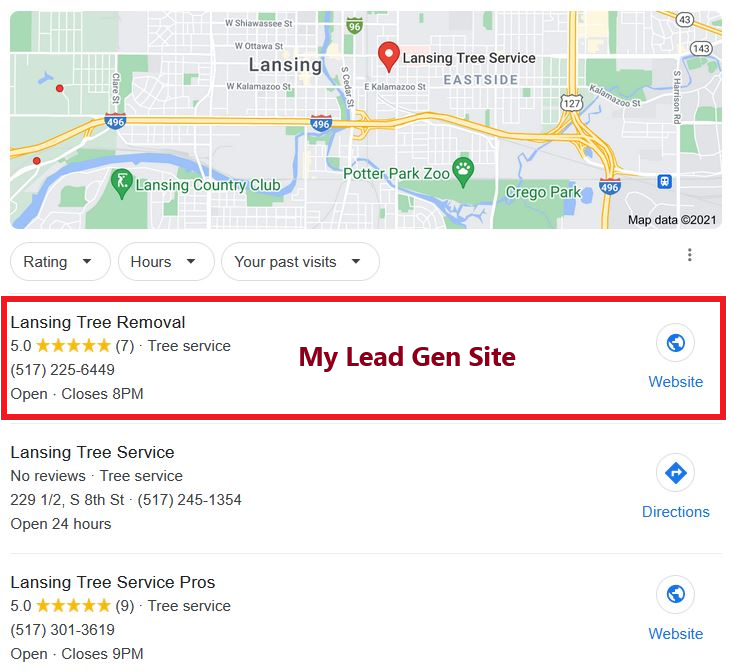
Through the power of local lead generation.
Within the 24 months it would take to start seeing an ROI on your fashion brand, you could already have a thriving passive income business through lead generation.
Instead of slaving over a clothing line that may or may not be successful, you could be working towards a business model that is guaranteed success.

Because the one thing that business will always tell you that they need more of is new leads.
So if you're ready to explore the local lead generation business model for yourself...
Click here to learn more about how we can help you get started.
