
Starting a business can be scary and intimidating.
Many people dream of the freedom that comes with being the captain of their own ship, and the freedom that comes with being a business owner…
But they have no idea where to start, and they’re afraid to fail.
This is exactly why starting a franchise is so appealing!
When you start a franchise business, there is a clear roadmap to success and proven business model to follow.
But that doesn’t mean that starting a franchise is going to be easy!
Which is why I’m here.
My name is Ippei, and I’ve been killing it with passive income and local lead generation since way back in 2014…
And I’m going to take you through this 7 step quick-start guide to opening a franchise business in 2021.
Let’s dive right in, shall we?
How to Start a Franchise in 2021
Considering Opening a Franchise in 2021? Here's What You Should Know:
Starting a franchise has it’s perks. But if you want to become a successful franchise owner, then you will need to start asking yourself the right questions, find the right franchise fit for you, find the right location, and manage the construction before you even get to your grand opening.
Start Up Costs
While this list is not a comprehensive compilation of every you need to start a franchise, it provides a snapshot of what you need to add into your business plan.
7 Step Quick Start Checklist:
1. Start Asking the Hard Questions
Before you can even begin to look for the type of franchise you want to open…
You have to know your why.
Are you looking to replace your income to completely support your family?
Or are you seeking an additional income stream as an investment opportunity.
Maybe your goal is to build long term wealth?
Deciding the reason behind why you are choosing to start a franchise will affect every other decision you make going forward in this franchising process.
The average franchise costs about $250,000 to open.
Some come in much cheaper than, and many, many more come in at a much higher price tag than this!
There is a real possibility of losing money if you fail to put in your due diligence in the beginning.
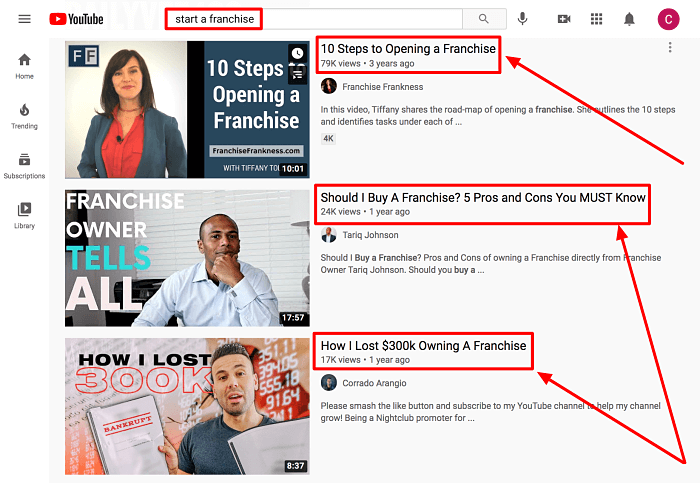
Which is why you cannot treat this step lightly.
You are making a BIG decision.
On top of the base cost of a franchise, most franchisor’s will have a net worth requirement and potentially even liquid capital requirements for their franchisees.
The lower the cost of the investment for the franchise, the more work you are going to have to put in on your end to get it up and running before you see success…
So don’t let cost be your sole factor.
Pro Tip:
If you are looking to lower your initial risk in opening a franchise… Ask your potential franchisor if there are any existing franchise locations for sale! Oftentimes, purchasing an existing location will drastically lower your investment risk, since the building will be finished and the franchise already has an established customer base.
Another thing to consider before choosing your franchise niche, is that the whole point of starting a franchise…
Is that you will be following a system.
If you are an out of the box thinker, or someone who likes to walk to the beat of their own drum, then starting a franchise might not be for you!
Can you follow the system and process set in place by the franchisor?
If not, think long and hard before moving forward.
There are even legal risks that might come with straying from the systems and processes in place.
You could risk getting sued if the franchisor discovers that you haven’t been doing things by the book, and your franchise location no longer represents their brand well.
2. Finding the Right Franchise
In addition to putting together your own personal financial statement and asking yourself difficult questions in preparation of investing in a franchise…
You should also carefully consider your previous business experience, and your current lifestyle.
Both of these factors will play a huge role when selecting the franchise that you should invest in.
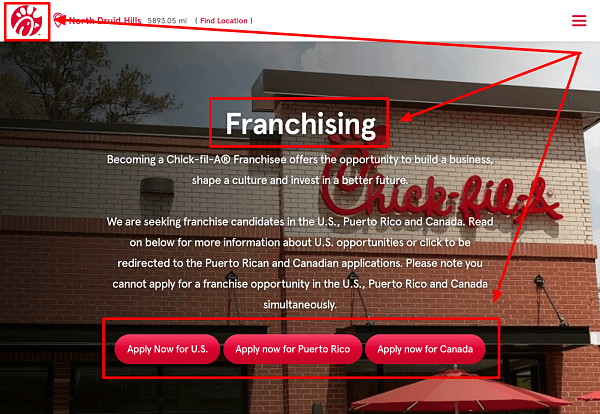
If you have no prior experience in customer service or restaurant management…
Then opening a Chick-Fil-A may not be the best move for you!
Plus, if you are accustomed to a lifestyle that includes regular family vacations and having your weekends free of work…
Then you may find yourself sorely disappointed if your franchise model requires you to be a hands- on franchisee seven days a way 52 weeks a year!
It’s best to be as realistic as possible about these things before you get caught up in an exciting franchise opportunity that just isn’t the right fit for you!
Because if it’s the wrong fit…
Then it’s probably going to be a bad financial investment.
Once you have narrowed down some of these major determining factors, you can begin to explore a list of potential franchise niches to decide which ones will be right for you.
Examples of Franchise Types:
When you land on a franchise model that resonates with you, it will be time to begin your concept search.
Essentially, once you find a handful of franchise concepts that appeal to you…
You'll need to call up their respective franchisor’s and do mini interviews to get a feel for what you might be getting yourself into.
Pro Tip:
When you are on the phone with a franchisor, ask them for a list of their other franchisees who might be similar to you and your situation. Speaking to someone who has walked the same path that you are about to embark on can offer much needed clarity for your decision.
When you are on the phone with the franchisor, be sure to request a copy of a P&L statement (Profit and Loss statement).
Although this will usually be expressed in terms of percentages, rather than specific numbers, it will help you to evaluate the bigger picture!
Typically, a franchisor’s main goal during your conversation will be to thoroughly evaluate your financial and practical franchisee viability and your commitment.
If they feel confident that you could be a good fit, they will proceed by sending over a copy of their franchise FDD.
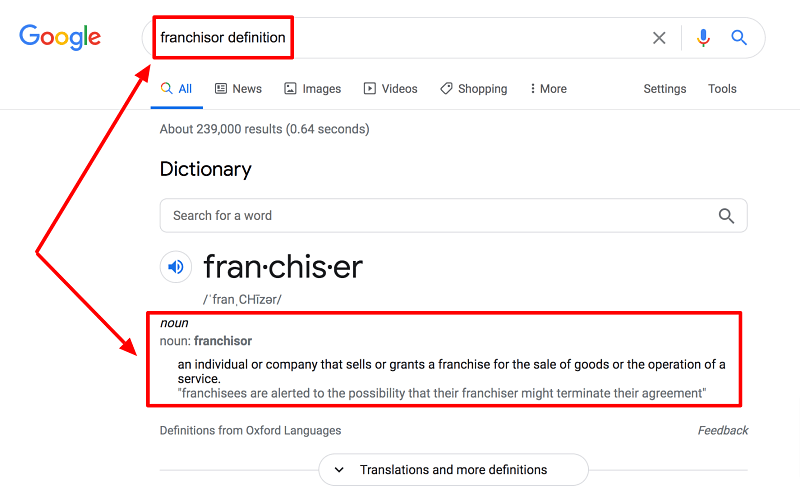
An FDD stands for: Franchise Disclosure Document.
You will need to review this document thoroughly and make yourself familiar with all the requirements that are being placed in front of you.
Once you feel confident in your decision…
It’s time to sit down with your bank.
Preferably, take this step before you get too invested in the thought of a specific franchise.
Since the franchisor has probably already made you aware of the financial requirements, your primary goal now is to fully understand your financing options.
There are a variety of different small business loans that you can look into:
7(a) Loans - This is the best option when a real estate purchase is also involved.
This type of loan can be used for:
To be eligible for the 7(a) loan assistance, businesses must:
504 Loans - This is for major fixed assets that promote business growth & job creation.
This type of loan can be used for the purchase of or construction of:
Or the improvement or modernization of:
A 504 loan CANNOT be used for:
To be eligible for the 504 loan, businesses must:
Microloans
This type of loan can be used for a variety of purposes that help small businesses expand, as long as that is under the $50,000 limit.
Some examples include:
A microloan CANNOT be used for:
To be eligible for a microloan, businesses must contact the intermediary lender as they each have their own specific requirements.
3. Taking the Leap (Buying a Franchise)
While I cannot stress enough the importance of taking your time in the decision making process of starting your own franchise business…
At some point you have to take the leap of faith and buy the dang thing!
It might feel intimidating…
But remember, you have done your due diligence to prepare for this moment.
And now it’s time to get a little bit excited, and dive right in.
You will typically be invited to attend a discovery day where the franchisor will invite you to their home office and explain the concept in detail.
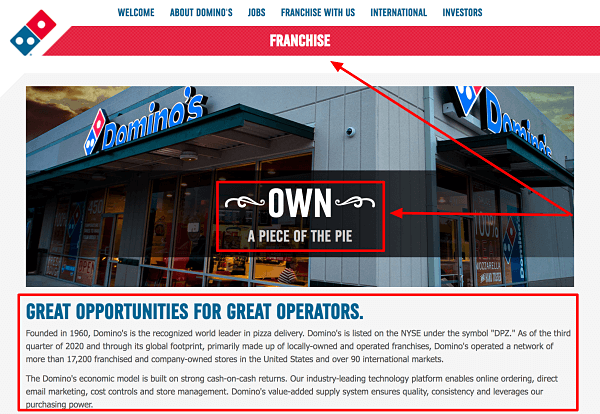
During your discover day (or potentially week), you’ll get to hear from all the major departments involved:
They will tell you what owning and operating this franchise looks like, and introduce you to all the important aspects of the business model.
All the while, the franchisor will be evaluating you... and vise versa.
Then comes the franchise agreement.
Dun, dun, DUNNNN!
This agreement is a contract between you and the franchisor that details out all the monetary implications, obligations, and requirements of you owning and operating that particular franchise.
And this is where you get to sign on the dotted line my friend!
Once you’ve signed all the fancy-schmancy legal paperwork and contracts…
Give yourself a minute to celebrate and reward yourself with a proverbial pat on the back.
This is a big day…
But the hard work is only just beginning.
So if you're starting to feel a little bit in over your head...
You're not alone.
Starting a franchise can be intimidating, and it's not for everyone.
There will be a lot of hard work and hands on sweat equity for many years...
So if you were imagining a more direct route to passive income and owning your own business...
There are other options.
For me, starting my own online business meant that I went from making 2K per month at my traditional 9-5 job...
To bringing in over 50K per month in only five years through online lead generation!
Local lead generation not only allows me to make a living from passive income, but it also enables me to help other small businesses grow by providing them with a steady stream of new leads.
It's a win-win.
And the best part?
Anyone can learn to do this!
If you want to learn more about how you can build a business through local lead gen, click here for more information.
4. Site Selection and Real Estate Transactions
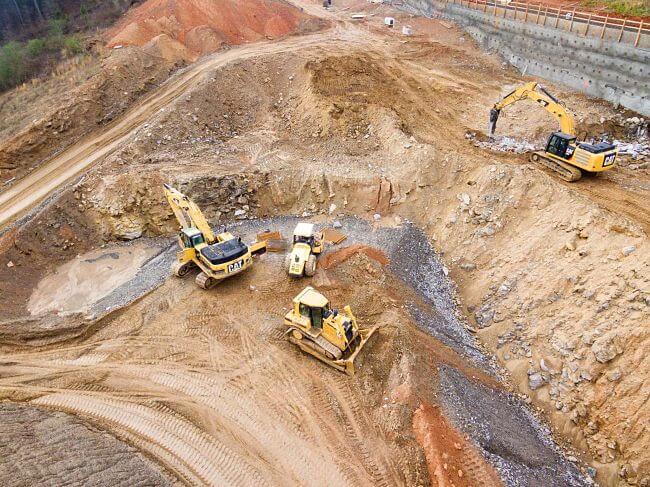
Now that you are under contract, and ready to get your franchise open for business…
You’re going to need a location!
Which means that it is time to dive into the process of site selection.
Site selection can be broken down into four different real estate factors:
You will need to carefully evaluate potential locations to ensure that they are up to par in all four of these different categories.
So what exactly do these four pillars of strategic site selection entail?
Physical Site Characteristics:
All of these elements are far more important that people realize!
If your location has great signage, but zero accessible parking areas…
People will avoid visiting your establishment due to inconvenience.
And just because you get great traffic, if your visibility is next to none…
People will pass by your business without ever knowing it’s there!
Choosing a site based on its physical characteristics can be the difference between a successful franchise, and one that shuts down in less than five years.
Demographics:
Be sure to look at these elements from a variety of radius distances from your potential location.
For Example:
Draw a five mile, three mile, and one mile circular radius around your potential site, and evaluate how your location demographics look from each of these circumferences.
Trade Area:
The trade area around your location will be very important for determining if you have found a viable location.
And it ties into your demographics as well.
The type of people that are currently patronizing the businesses in your trade area will be the people who will hopefully be patronizing your business.
So if your franchise model attracts a demographic of primarily young people…
Then a location near a university, or in a shopping area with retail stores, theaters, and fast food restaurants, would be a great trade area to set up camp.
Competition
Lastly, you will need to pay attention to your competition.
Who are the competitors in your market?
And are these competitors direct or indirect?
Now don’t get me wrong, competition isn’t always a bad thing!
Because it means that there is a demand for what your franchise has to offer.
But it is something to keep in mind.
Once you’ve narrowed down your site, you will need to decide whether you are going to lease or buy the property.
Usually, leasing is pretty standard.
Then you can start scheduling the building project, writing letters of intent, and signing the lease agreement itself.
5. Plans Generation and Permitting
Alright!
It’s time to hire an architect and get going on your franchise project!
While it’s no secret that plans and permits can be a pain in the ass…
A little organization, and consistent communication can go a long way in ensuring that this portion of the process goes as smoothly as possible.
This will be a time to stay in heavy and consistent communication with the franchisor, as they will have a lot of input and experience in this area…
Having done it before with who knows how many other franchisees!
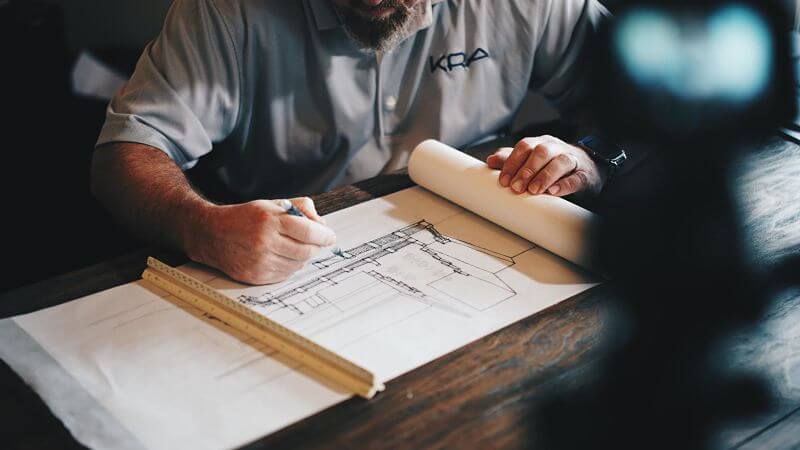
Lean on them for advice and draw on their wisdom.
A reasonable timeline for obtaining your plans and permits will usually be between 30-45 days.
During this phase you will also be working with the following groups:
Your franchisor will also get the opportunity to review your plans and make comments to ensure that everything lines up with their brand’s standards.
The permitting stage begins as soon as the architect submits your plans for review to the agency having jurisdiction in your local area.
Although the agency with legal jurisdiction will vary based on the municipality where you live, they will typically be one of the following departments:
Your architect will then also submit your plans for bids.
What this means is that they will produce a CD set or a hard copy set of the plans for contractors to review and place bids on.
You will want to get at least three bids from three different contractors because you will need to make sure that you are getting a fair market value price for your franchise construction.
And once you have accepted a reasonable bid for your project, you can move on to having your General Contractor pull a permit for your project!
6. The Construction Phase
Ultimately, it is your GC’s responsibility to manage all of the moving parts involved in construction.
However, you are still the owner of your franchise business, so you should always get a construction schedule from the GC before construction even begins.
This is important because you will be responsible for keeping up with the timeline commitments you made in your lease agreement and the agreements made with your franchisor.
It’s your job…
Not the General Contractor’s job, to ensure that these things happen.
Although setbacks are inevitable with construction projects, you will know if your GC is falling way behind if you have a physical timeline to refer back to.
And you can then hold your general contractor accountable for this timeline (within reason).

Once you reach the end of construction (which might have begun to feel like finding a real-live mystical unicorn at this point)...
You will be issued either a CO or a TCO.
A CO is your certificate of occupancy, which means that your local building department has signed off on everything and you are ready for opening day!
But if you receive a TCO, this will be a temporary certificate of occupancy…
Which means that you are still responsible for obtaining the permanent certificate of occupancy at a later date.
The good news is that even if you are only granted a TCO initially…
You may be able to begin on things like training or inventory!
Another final step is to complete a punch through with your General Contractor.
And no…
This is not where you get to take out all your pent up aggression for his project setbacks along the way.
A punch through is where you will get to do a walkthrough of your build with your general contractor....
So that you can make sure that everything holds up to the standards established in your lease agreement and per your contract with them.
7. The Grand Opening
Congratulations!
You are almost at the finish line of opening your franchise.
Well, not exactly.
Your grand opening is more the starting line than the finish line…
But still.
It’s a proud moment!
And this is where your franchisor will really come into play.

I say this because a lot of the departments from your franchisor’s main office will typically come down to be involved, including:
Sometimes you will even be required to complete physical training hours at a training center or another franchise location.
But at a minimum, someone from the franchise headquarters will come to make sure that both you and your team of employees are trained and ready for opening day.
The goal is for them to help you with all the final steps, and make sure that you get open correctly and per company and brand standards.
While you might have access to continued training per your franchise agreement…
Try to soak up as much information as possible while these teams are present.
They are your key to success!
Then comes the exciting part:
You get to throw a Friends and Family event!
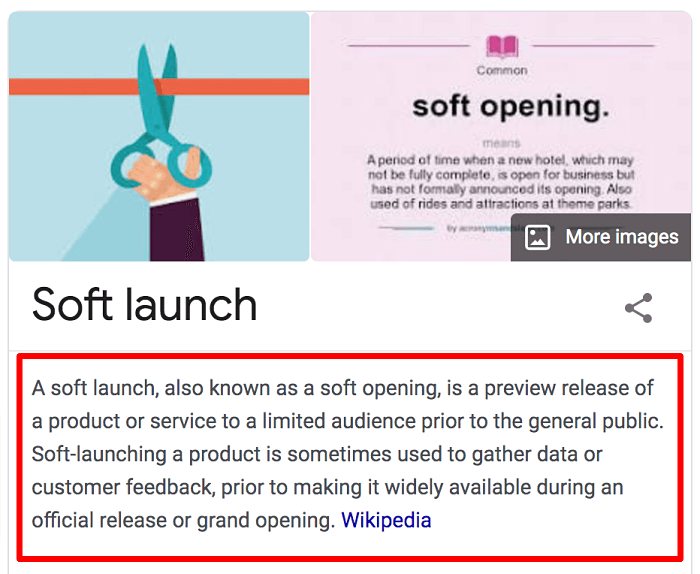
This is where you have a “soft opening” on a scheduled day by invite only.
And it is your opportunity to showcase your hard work, and everything you have put into your franchise location during the process.
Keep in mind that this celebration isn’t just for you, though!
It is also a great way to honor those who have helped you along the way.
Consider inviting the people who were intricately involved in the process of your franchise journey, like your broker, or your General Contractor.
But whoever you invite, don’t forget to drink it all in and enjoy the fruits of your labor.
Because you are now an official franchise owner!
Pros and Cons
of starting a franchise business
Pros
The entire point of a franchise is that when an entrepreneur has found success, they decide to duplicate their idea and sell that success to others. The beauty of this is that when you buy into a franchise, you will have a proven business model to follow. Assuming that you’ve chosen your franchise model wisely. Regardless of the success that has gone before you, there will always be some level of risk involved with a business investment.
After you have your franchise up and running, there is the potential to work up to a more back-seat, hands-off position for yourself. If you can train someone to handle many of your responsibilities, owning a franchise can lead to passive income in the long term.
Whether you want to open a McDonald’s, a UPS store, or something in between… You’ve got seemingly endless franchise options to choose from! Pick your niche, and run with it.
For many aspiring entrepreneurs, one of the greatest draws to launching a business is the freedom to set your own schedule. There’s no boss to dictate your day, or look over your shoulder… You are in control of your time. This can be both freeing, and stressful. But for most small business owners, it is one of the most gratifying aspects of being self employed.
Cons
The average franchise costs about $250,000 to open. Let that sink in. If your franchise “opportunity” is going to cost you less than $10,000… I would warn you that it will be far more of a trap than it will be a business opportunity. Think about it… When you buy into a franchise model, you are paying for someone else’s hard work and success. They’ve perfected a business model that has been successfully duplicated multiple times, and it will cost you to ride the wave of that success for yourself.
If you have any visions of earning steady passive income from your franchise business… I encourage you to lay those aside. Your income as a franchise owner will still be linked to your hours. While owning your own franchise business can eventually lead to consistent passive income, that is a long ways down the road.
Just because you own a franchise doesn’t mean that you’ll be sitting in the lap of luxury with passive income raining down upon you. In fact, many franchise owners spend long hours hands-on in the day to day operations of their business. Especially if it happens to be a restaurant franchise model. Some franchise business contracts actually require the owner to be present and working at their location!
The downside to buying into someone else’s proven business model… is that it will never be yours at the end of the day. Sure, you may own your location. But the brand, the idea, will never be yours. And because of this, you will have less authority and creative freedom over how your business is run.
Opening a Franchise Can Work, But Only If You Know This First:
I’m going to shoot straight with you here.
There is immense potential to make money, and maybe even passive income, as a franchise owner…
But just because you own a franchise doesn’t mean that you will have it any easier than any other small business owner.
Having a proven business model is great, but it won’t guarantee you success.
You will still face the number one problem that all other small business owners face: getting more customers.
Without new leads flowing in, your franchise cannot thrive.
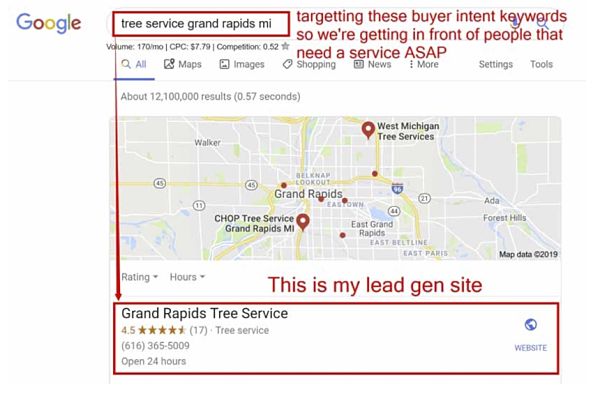
Which is why you need a strong lead generation strategy in place before you jump into the world of becoming a franchisee!
We specialize in teaching local business owners how to do exactly that.
And once your online lead gen system is set up and running like clockwork…
You get to turn your attention back to the areas of your business that need your attention the most.
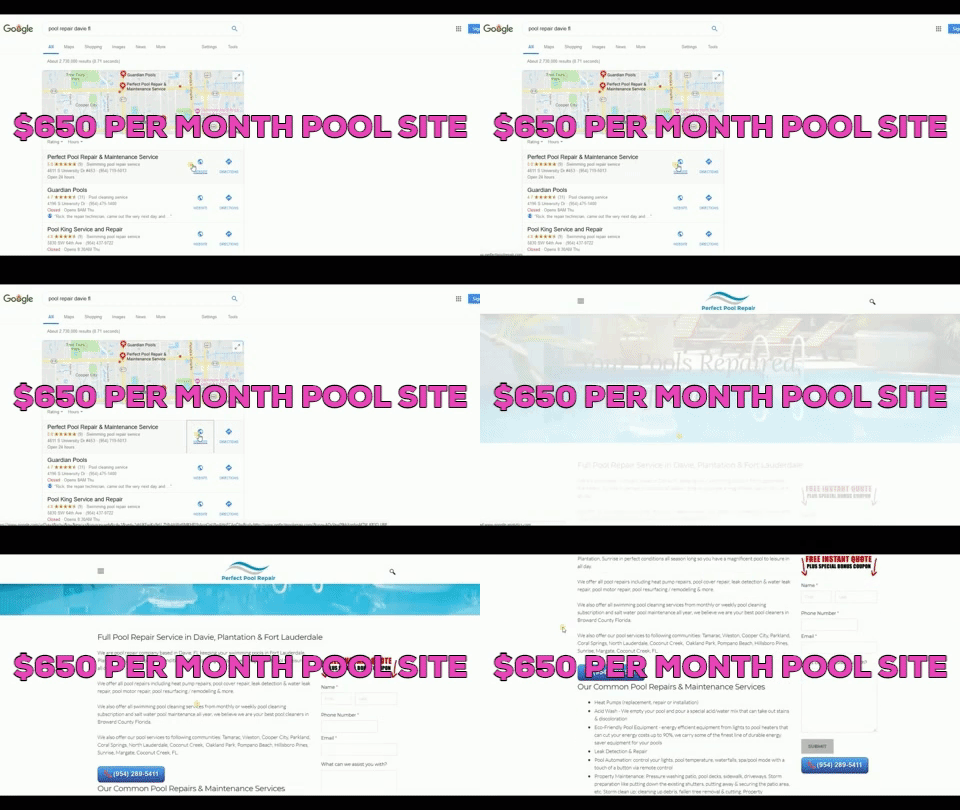
Like serving your customers!
Online lead generation relies on the localization abilities of Google and strategic SEO to produce a steady stream of new leads practically on auto-pilot.
And anyone can learn how to do this.
So if you want to know how we can help generate new leads for your franchise, then click here for more information.
