
I'm Ippei, your friendly neighborhood specialist on all things passive income, online business, and local lead generation...
And If you’re passionate about starting a business from scratch in 2021, then this 10 step guide is exactly what you need to get started in the right direction.
There are pros and cons to starting a business from scratch, but if you’ve always dreamed of generating passive income from home…
Then you’ll want to hang in there until the end.
Trust me.
So let’s dive right into the steps to start a small business!
How to Start a Business from Scratch in 2021
Starting a Business from Scratch Summary
Let’s face it, with the internet, anyone can start a small business from scratch! But to be successful, you will need to put in the hard work. To get started, you’ll need to draft a business plan, research your business ideas, and acquire funding. Plus developing your brand and USP!
Quick Start Checklist:
1. Write Business Plan
Ahhhh…
The glamorous lifestyle of having your own business…
Just kidding!
Starting a business from scratch is going to look a lot less like having all the free time in the world and a fancy new car in your driveway…
And a lot more like sitting in front of your computer drafting detailed notes for your business plan.
It’s certainly not the sexiest part of starting your own company…
But trust me, you don’t want to skip this step.
Even if you have to hire someone else to do it on a platform like UpWork...

Writing a business plan is a tried and true method for good reason.
Your business plan is designed to help you get organized, plan for the future, gain investors, and course correct if you lose focus or get off track.
It’s a combination of goal setting, and detailed research…
And yes, you really do need to write one before you get started.
If the idea of writing a 50 pages business plan is making you start to twitch…
Take a deep breath.
You probably don’t need to create a document this intensely detailed on the first go.
If you need to use your business plan to attract investors or obtain a small business loan in the future…
You can always come back to it and beef things up a little.
For now, focus on including these six key points:
Key Business Plan Sections:
2. Ask Yourself Hard Questions

When you make the decision to start your own business, you need to be honest with yourself about what you’re signing up for.
Running your own startup company sounds enticing when you think about ditching your 9-5 desk job and saying goodbye to your boss for good…
But there is a lot that goes into being a business owner beyond the freedom of your schedule.
In fact, the beginning stages of running a business may actually require more of your time than a traditional job.
Working towards a flexible schedule, increased freedom of your time, and passive income are admirable and attainable goals…
But they won’t happen overnight.
If you are going to be a successful small business owner, rather than joining the ranks of the 50% of businesses that fail after only five years…
You need to get really honest with yourself, and ask some hard questions.
All of these questions will play a huge role in how you structure and run your business…
And in what jobs you hire out first!
There’s nothing wrong with staffing your weaknesses.
But more on that later.
3. Research Your Idea
Once you’ve done your due diligence for an honest self evaluation…
It’s time to evaluate and research your actual business idea!
When going into your research, keep in mind all of the things you’ve observed about yourself so far.
You’ll want to apply this to the research and information that you gain about your business model to see how running your business will look on a realistic and practical level.
A bookkeeping business might be an affordable and profitable business model that doesn’t require prior education or certifications…
But if you absolutely hate math and dread administrative tasks…
It might not actually be the best business model for you.
Dive into all of the skills and equipment that your business idea will require, as well as your aptitude for that business model.

Maybe a skill learning site like Udemy is something that could be helpful for you?
In addition to required skills and equipment to make your idea a reality…
Find out how much it’s actually going to cost you to get started!
Make detailed notes on startup costs, average annual revenue, profit margins for that industry, and the take home pay that you can realistically expect from your business.
Lastly, thoroughly research the market you will be entering into.
Make note of the price point of the market you business falls into, the average target customer for your niche, and the marketability of your particular business.
A well researched market analysis can be the difference between success and failure for your new business.
4. Identify Your USP
Why should someone buy from you?
Well, this is exactly the question that your USP sets out to answer.
So what exactly is a USP?
It stands for “Unique Selling Proposition,” and it represents the difference between you and everyone else in your industry.
If that sounds like some vague business mumbo-jumbo to you right now…
Here are some examples of popular business USP’s that should help clear things up:
Starbucks’ USP is: “Love your beverage or let us know. We'll always make it right.”
And Domino’s USP is: “You get fresh, hot pizza delivered to your door in 30 minutes or less or it's free.”
Take a look at Warby Parker’s: “Try five frames at home for free!”

All of these companies have clearly stated what makes them different from their competitors, like Dunkin Donuts, or Papa Johns, or Zenni.
Sometimes a USP can become a slogan, but it doesn’t have to be.
The important thing is that you know what sets you apart from the crowd…
And that you’ve clearly communicated this across all of your branding and marketing to your ideal customers.
Your USP will also become the driving force behind why you are in business.
If you don’t believe that what you are offering to the world will genuinely add value…
No one else is going to believe you either.
A strong USP will be the backbone and confidence streak of your startup even when the going gets tough.
Start by writing down the answers to these questions:
Questions to Find Your USP:
Once you have the answers to these questions, try to create a USP that is no more than two sentences long.
Generally, the more concise you are, the more effective your USP will be.
5. Brand Basics

Even with all the research and hard work that you have put into your business leading up to this point…
Your business won’t be complete without a clear brand.
It isn’t enough to just pick a name and a product or service to offer.
You need to brand your business.
Your brand is like a thumb print.
There may be other businesses similar to yours, but your brand will be completely unique even from your competition.
It’s the core of what your business does and what it stands for.

“A brand is emotional shorthand for accumulated or assumed information. A brand is present when the value of what a product, service, or personality means to its audience is greater than what it does for the audience.”
Austin McGhie ‧ Author
BRAND is a four letter word:
Positioning and The Real Art of Marketing.
If you are struggling to create a brand, writing a mission and vision statement for your business may be helpful.
Your mission statement defines your business, and your vision statement describes your goals for the future of your business.
Another helpful tool in the branding process is to hire a graphic designer who can hear your ideas, evaluate your mission and vision statements…
And then craft those thoughts and ideas into a meaningful logo.
6. Make It Legal
Now this is a big step.
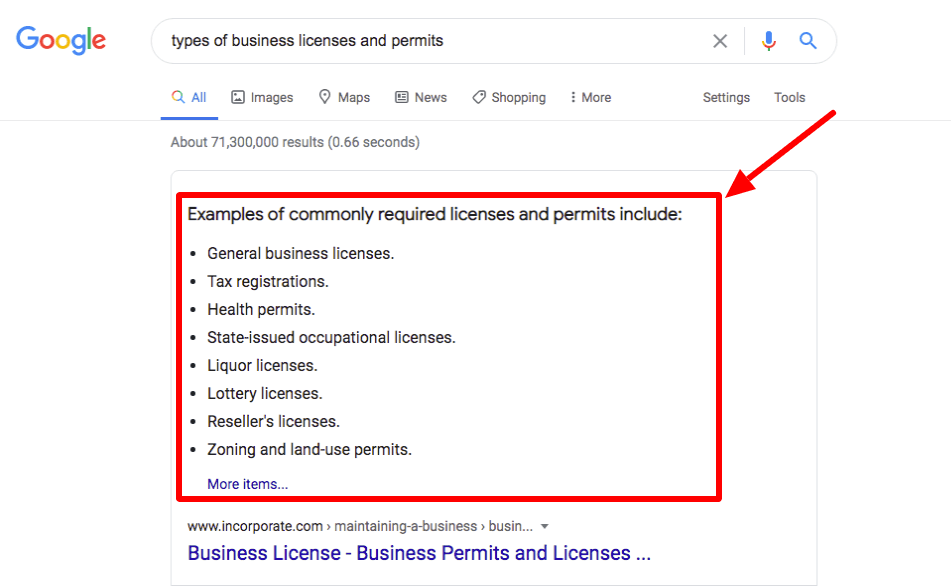
Registering your business and choosing a legal structure for it are major steps towards your end goal.
How to register your business will vary from state to state.
But usually, you will need to register with your state’s Secretary of State, Business Bureau, or Business Agency.
Make sure you look into the specific requirements for your industry and local area.
You will also want to register online with the IRS for your business EIN number.
An EIN number has multiple purposes, but it mainly comes in handy for tax purposes, opening a bank account, applying for a business license, and even hiring employees.
Think of it as your business’s own social security number of sorts.
But wait one second!
Before you can register and launch your business, you need to choose a business structure.
By default, your business will fall into the category of a Sole Proprietorship if you choose not to form another business structure.
While a Sole Proprietorship structure is perfectly fine if you aren’t bringing in a lot of money, it has major disadvantages from a legal standpoint.
If your business is structured as a sole proprietorship, there is essentially no protection for you as the business owner because you will be held personally liable for your business in court.
It will also make obtaining financing much more difficult.
You do have the option of forming an S Corporation, but the chances of needing an S Corp structure when first starting out is extremely unlikely.
This is the most complex business structure that really isn’t designed for small business owners.
If you are starting a business from scratch on your own, an Limited Liability Corporation (LLC), will probably be your best bet.
They are easy and affordable to form, and offer greater legal protection for you personally as the business owner.
7. Acquire Startup Funding

When you did your due diligence work during the research phase of this checklist, you might have panicked a little bit when you realized how much starting your business will actually cost you.
Acquiring startup funding for your business can be an intimidating process, but there are a variety of solutions!
First of all, you can consider going into a business model that relies more on your own skill set rather than a product that you will need to develop and sell.
This will usually make the process more affordable to start up.
But if you want to start a business with no money at all…
I’m afraid that probably isn’t going to happen, my friend.
Think about it…
If you want people to invest in you, then you’re going to have to be willing to invest at least a little bit in yourself.
Even if you are starting a service based business, such as graphic design…
You’re still going to need to invest in a high quality computer, photoshop, external hard drives, and some high speed internet.
Don’t mistake minimal investment for starting a business for free.
Starting a business with zero investment just doesn’t happen.
If you’re dead set on starting a product based business, or a business that simply requires extensive startup funding…
Here are a few options you can look into:
Startup Funding Options:
If you go the route of a small business loan, family loan, or investor, you’d better keep that business plan handy.
They will want to see that you have done your research in advance, and that there is going to be a good return on their investment in the future.
Just in case, here are some options that are NEVER recommended for obtaining startup funding...
NOT Startup Funding Options:
8. Website and Marketing
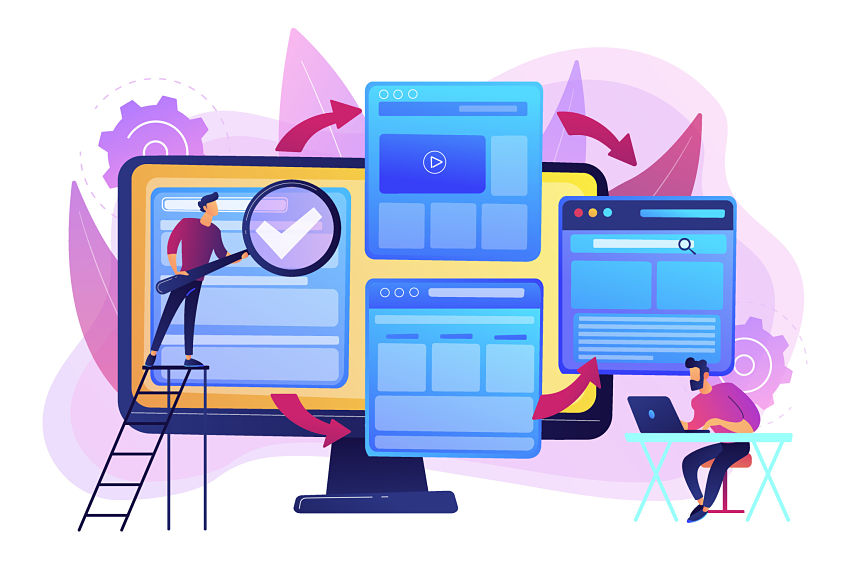
Next thing on the to-do list is building your website!
While you can hire this out to web designers or graphic designers, you can absolutely do this step yourself as well.
Thanks to the many user friendly website builders available now, graphic designer and website building is attainable…
Even for design dummies!
Some of my favorite user-friendly, quality website builders are:
Most of them are built using drag-and-drop templates that make crafting a website from scratch for your business super easy!
These templates have already been designed to be aesthetically beautiful and functional, so all you have to do is select one that fits your industry or business model, and fill in the blanks!
Once you have that website up and running, you can use your site to start your email list.
Email marketing is a great way to get the word out about your new business, as well as retarget and market to potential customers.
In addition to your website and email marketing campaigns, don’t forget to establish an active presence on social media as well.
All three of these marketing tools will work together to help you get your business idea off the ground.
But a strong marketing strategy requires more than a killer website, email lists, and social media platforms.
Ultimately, you will have to be prepared with a lead generation strategy that will attract new customers to your business on a consistent basis.
Fortunately we can teach how to do exactly that through our local lead generation coaching program and online course.
9. Grow Your Team
Congratulations!
You’ve now started a business from scratch!
But now what?
It’s time to grow and scale, friend.
Grow, and scale.

You’ve crossed the hurtle of how to create a business out of nothing.
Which means that you can look towards building a team of employees to help you make your long term business goals happen.
Your first employees should be so much more than just a standard employee.
This key group of individuals should be carefully hand picked to come alongside your mission and vision and staff your weaknesses.
The best thing you can do for yourself once your business starts to grow, is to honestly ask yourself what you suck at.
The smartest business owners and entrepreneurs aren’t afraid to admit when they aren’t good at something.
Instead of plowing ahead and wasting time on weak areas of their business alone, they hire people who are smarter than them and better than them.
A true leader isn’t afraid of being surrounded by people who are smarter than they are…
In fact, they see this as the smartest move of all.
Bonus- Entrepreneur Mindset

Finally, the best thing you can do to set yourself up for success as a business owner is to start thinking like an entrepreneur.
There’s a reason why not everyone starts their own business.
It’s HARD.
And it takes a different kind of mindset.
The mindset of an entrepreneur.
An entrepreneur isn’t afraid of failure, or hard work.
They view them both as valuable teachers.
But they also know the value of making their money work for them, rather than being a slave to their money.
Having your money constantly tied to your physical presence at a job and the hours you put in will never allow you the freedom that you probably were hoping for when you decided to start a business from scratch.
Unless you structure and scale your business to create passive income, you will end up married to your job as much as you were before if not more so.
So then, what is the answer?
Passive income can come in many forms…
But keep reading, I’m about to introduce you to my personal favorite.
You’re not going to want to skip this.
Starting a Business from Scratch Can Work, but Lead Gen Should Come First:
Whether you’ve grown tired of the rat race of your nine to five desk job…
Or you’ve gone into business for yourself only to end up feeling frustrated and burnt out…
You’re probably wondering how on earth passive income actually works for “normal people”.
Sure, it’s probably all good and fine for the likes of Jeff Bezos…
But for the rest of us, not so much.
Or is it?
I say that passive income is for anyone and everyone who is willing to put in the work up front to make it happen.
And I speak from a place of experience.
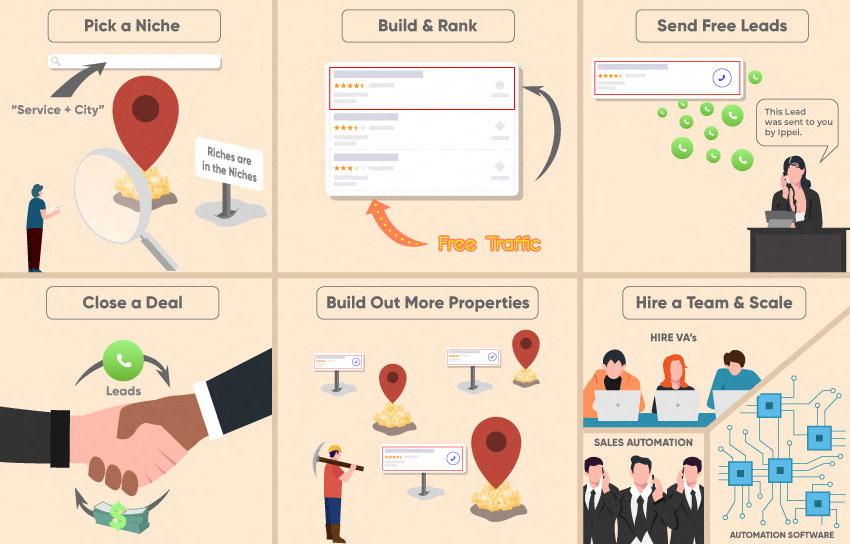
I have tried everything from affiliate marketing to dropshipping.
But the business model that changed my life and catapulted me from making 2K a month at my job to over 50K a month in five years…
Is online lead generation.
This is the passive income model that I swear by, and the one that I recommend to everyone.
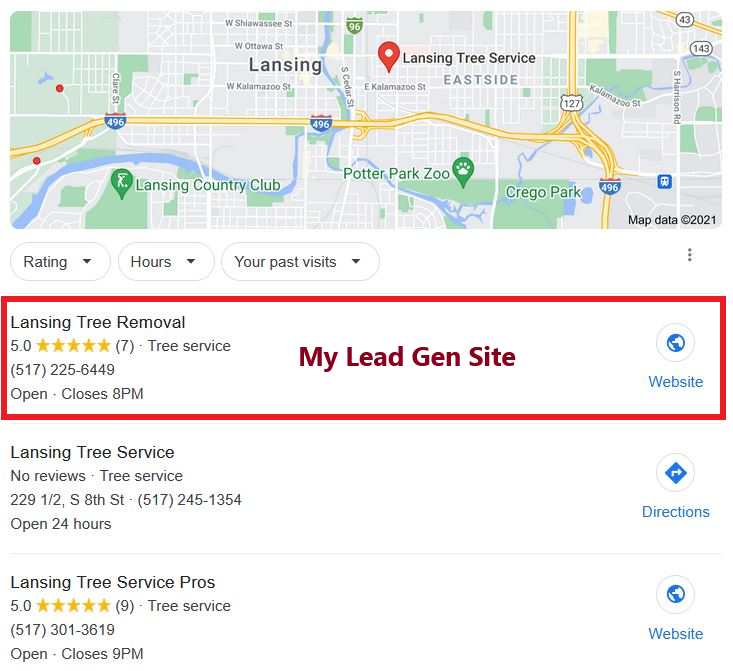
Because there’s literally nothing better than making passive income, while solving a major problem for other small business owners.
If you’ve already dabbled in starting a business, then you know what I’m talking about.
Leads are the number one thing that small businesses will always need more of!
Which means, if you’re going to go into business for yourself…

You need to learn lead generation first!
Then, any business endeavor your start will be set up for success.
Plus, you’ll be able to fund your business ideas through the passive income from your online lead generation properties.
Lead generation is a skill that relies on basic SEO tactics and Google to produce consistent leads for businesses in a variety of industries.
And it's a game changer for business owners and entrepreneurs.
If you're ready to dip your toes into the magical waters of local lead generation...
Click here to learn more about how we can help you get started today.
