
Everyone raves about your paella and your lasagna can’t be beat, plus the list of family baby showers and friends’ parties that you’ve been asked to cater is only growing.
You’ve thought about starting a catering business before, but now you’re officially ready to jump in and give it a try.
But suddenly you’re wondering… “Can I start a catering business?”
Yes, yes you can.
I promise.
I'm Ippei, a master of all things online business, passive income, and local lead generation...
And in this 9 step quick-start guide, I’m going to walk you through everything you need to know about starting your catering business in 2021.
Plus, I’ve taken care of the hard part for you by doing all the research on the initial investment and startup funds.
And to spice things up a little, I’ve also thrown in my number one tip for success in your catering business at the end.
So let’s dive right in: it’s time to get cookin’ and get your catering business going!
How to Start a Catering Business in 2021
Starting a Catering Business this year? (Here's what to expect)
Opening a catering business in 2021 can be a very profitable endeavor. To get started, you will need to invest in your equipment, choose whether you will operate out of your home kitchen or a commercial kitchen, and create your menu and pricing structure.
Start Up Costs
While this list is not a comprehensive compilation of every you need to start a successful catering business, it provides a snapshot of what you need to add into your business plan.
Startup Costs Breakdown:
Average Total Startup Costs: $267,950
Annual Revenue of Established Catering Business
According to High Caliber Catering, the average annual revenue and average profit margin of the catering industry is:
Average Earnings:
Average Catering Profit Margin: 7.5%
Quick Start Checklist:
Step 1: Write a Business Plan
When you’re in the process of starting a catering business…
One non negotiable will be creating your catering business plan.
The chances of needing some sort of funding or financing along your catering business journey are very high.
Mainly because catering tends to be a seasonal business, so your income will ebb and flow throughout the year.

Whether that is due to your business niche, like weddings, where your catering jobs will peak during spring and autumn, and fall during summer and winter….
Or because of various holidays throughout the year.
When you are first starting out, this ebb and flow can be difficult…
And you may find yourself in need of a small loan to get you through a slow season, no matter how well you budget.
Because of this, take the time now to create a thoroughly researched, well written, formal business plan.
If you do end up in the position of needing to obtain a small business loan or even a hard money loan several months down the road…
Your business plan will be a huge factor in qualifying for the money that you need.
A formal business plan should include a minimum of these basics elements:
Basic Things to Include in a Business Plan:
In addition to being a requirement for most loans, startup funding, and investors…
Your catering business plan will also help you to narrow your focus and stay on track with business goals.
Starting your own business will usually result in a lot of input and ideas being thrown your way by well meaning friends and family.
It can be all too easy to become distracted from your original vision when everyone else’s opinions start to get in the way.
Refer back to your business plan for guidance, reassurance, and the firm reminder of your end goal.
Step 2: Insurance and Legalities
If you haven’t already guessed it…
The next step in opening a catering company is to take care of the insurance and legalities.
Before you can serve a single plate of food or even think about stepping foot in the kitchen for an event…
You have to get these things handled.
Working within the food industry is a high risk industry.
One case of food poisoning from your famous oyster bisque or an employee that cracks their head open from slipping on your new kitchen’s shiny tile floor…
And your business is toast.

Say goodbye to catering company dreams, because you’ll be up to your eyeballs in lawsuits and potential debt if you haven’t taken the proper precautions.
At a bare minimum, you’re going to want to invest in solid liability insurance coverage.
As you move forward, consider upgrading your insurance policy to better fit your needs as your catering business grows.
There are also specialty Insurance programs that provide insurance for specific Industries like the food service industry.
They know exactly how to measure the risks of operating a food truck, a commercial kitchen, or even being a vendor at a farmers market.
The licenses you will need as a professional caterer will vary, so allow check with your state and local regulations.
Here are some basic licenses and legal requirements to get you started:
The bottom line is to make sure you do your homework, so that you're doing everything you need to when it comes to paperwork:
Like getting your business license and food liability insurance.
Step 3: Catering From Home
One of the biggest questions you may have about starting your catering service is, “Can I start a catering business at home?
Unfortunately, the answer to this question isn’t cut and dry.
In some states, the health department’s regulations for running a food based company from your home kitchen are quite lenient.
Your state might only require you to have a placard up that shows that your food preparation takes place in a place that's not a standard commercial kitchen or subject to regulation.
But in many places, starting a catering business from home is a much more complicated process.

In fact, your local regulations may even require you to have a completely separate commercial grade cooking space for your personal meals if you are running a catering business at home.
And you will generally not be allowed to use the same equipment, cooking utensils, or supplies for both personal and catering needs.
Which means you’re going to need a whole new set of pots and pans…
And probably a whole load of other stuff as well like commercial grade refrigerators and stand alone freezers.
For most people, this isn’t a realistic option.
But even if you can separate your cooking spaces and utensils…
Don’t forget about the storage needs that will be required to run a catering business out of your house.
It’s best to know what you’re getting yourself into before you go through the trouble of having your personal space inspected by the health department for use as a catering kitchen.
Decide whether the financial trade off will be worth what could turn into a full kitchen remodel/addition.
If the requirements are worth it to you, then the only thing you will really need to be aware of is that you will be required to pass regular health department inspections, just like any other restaurant.
Step 4: Finding a Kitchen
I’m guessing that what you just read is probably making your head start to swim.
Just take a deep breath…
There are other alternatives than starting a catering business from home…
And they don’t have to break the bank!
Although you can take the leap of leasing your own commercial kitchen space…
This isn’t the only option in front of you.
You can also look into finding a local commissary kitchen.

Commissary kitchens are shared space, commercial grade kitchens that can be rented out by a variety of different restaurant industry professionals.
If you have a commissary kitchen in your area, this can be an affordable alternative to remodeling your entire home kitchen.
But if you’re coming up dry on the commissary kitchen front, try looking into the following options:
Food trucks are a great option because they effectively solve two problems in one:
They become your commercial kitchen, and your delivery vehicle!
Renting out a local church kitchen is also a possibility.
Many times, church kitchens are equipped with all the necessary commercial grade equipment that a restaurant would be…
But they may not be getting much use out of it, and will gladly rent it out!
Finally, ask around to your local restaurants.
If they have a significant amount of hours where their kitchen is not in operation, they may be willing to rent out their kitchen to you depending on your schedule.
There is always a solution...
So don’t give up until you’ve explored all your options!
Step 5: Creating Your Menu (& Pricing)
A passion for food and the culinary arts is almost always the spark behind a good catering business.
So if you are excited to start your own catering company in 2021…
Then it’s probably because you’ve already spent hours day dreaming about your menu.
Be honest…
You can already picture the menu in your mind, and predict your best selling entrees, am I right?
Good!
Because the key to setting yourself apart as an incredible caterer is to have a niche.
Think about it.
The Cheesecake Factory has a menu the size of a small novel…
But the best item that they serve is right there in the name:
Cheesecake.

Everything else manages to fall short because it’s outside of their niche.
Generic “do it all” catering companies will never be able to stand out, and in their desire to attract the widest amount of potential customers…
They will actually lose more people than they gain in their mediocrity.
Don’t be afraid to stand out!
If you want to solely cater a cultural menu of traditional Vietnamese Pho bowls from your food truck…
Then go for it!
Or if you’re passionate about full service catering and vegan comfort food…
Stick to that.
Whatever you do, do it with excellence and stick to your niche:
The business will come.
One last thing to keep in mind when creating your catering menu is pricing.
A simple template for accurate catering estimates is:
These steps will help you narrow down your per person cost, which is most often the number your clients are going to be asking for.
Keep in mind that your food costs are going to shift and change.
A simple jump in gas prices can completely shift your cost of ingredients from your local supplier…
Which will cut into your profit.
And if you choose to up your catering costs in light of these changes, a customer that was expecting to spend $30-$40 a head may not be willing to spend $50+.
You will have to decide whether it will be better for your business to eat these losses or, up your prices at the risk of losing business.
Step 6: Prepare to Invest in Equipment
Your catering equipment is going to be one of the biggest investments you will make getting started.
The bad news is that it probably won’t be a one time investment.
I wish I could tell you that it was.
But depending on the amount of jobs you take on per year, you may have to replace cookware (like pots and pans) multiple times within a year.
The best advice I can give you is to invest in quality from the beginning if at all possible.

As tempting as it is to save money in the beginning…
It won’t be worth it if your equipment doesn’t last.
In addition to normal wear and tear that comes with consistent use, you will also have to prepare for accidents.
Whether that’s because your guests keep breaking your fine china, or your employees damage something from improper use…
Accidents happen.
It’s not a matter of if, but when.
Set aside a section in your budget for replacing lost supplies and equipment and thank me later.
If your available capital to invest is tight and you don't have the money to buy your own equipment…
It’s still not the end of the world.

You can rent your equipment in the beginning until you build up enough cash-surplus to invest in your own.
Another major business investment that you will probably need to make is in a catering vehicle.
If you are expecting to deliver your catering meals out of your personal Prius…
Think again.
You’re going to need a large van or vehicle with significant trunk space.
Just don’t forget to write off those miles for tax time!
If you are working out of your house or a commissary kitchen you may also find yourself in need of storage space for your equipment, cookware, and supplies.
Step 7: Website and Marketing
Creating an effective and sustainable marketing strategy for your new catering business is a must.
Although word of mouth referrals will probably be your best source of leads, you can’t afford to rely entirely on word of mouth if you are wanting to grow and scale your business.
If you are wanting to encourage referral bookings however…
Incentivising referrals is a great way to start filling your calendar.
When you have a satisfied customer (which is hopefully every customer!), offer them an incentive if someone they refer to you books a catering job.
Referral incentive ideas:
Your next greatest marketing tool will be your website.
When creating your website, be sure to post your menu and prices.
Most people want to know what you offer, and a ballpark figure of how much it’s going to cost them before they even reach out.
So if you don’t include your menu options or average prices, then potential clients may pass you by.
But on the flip side of this…
Don’t post your menu and prices unless you can commit to keeping them updated consistently.

You will only end up with frustrated clients if they call you only to find out that nothing on your website is accurate anymore.
Once you’ve created your website, move on to opening a Google My Business account.
This will help you start to rank locally within Google’s search results and map, and can greatly increase your visibility to potential clients.
And finally, don’t forget to create your social media accounts.
You don’t need to have a presence on every social platform out there, but pick 2-3 and post consistently.
Pro Tip:
When posting pictures to social media, or building out your website… Take the time to hire a professional food photographer. People eat with their eyes, so the quality of your menu photography will greatly impact your bookings.
A strong marketing strategy requires more than just a website, GMB page, and social media accounts, though...
You need to be prepared with a lead generation strategy that will attract new customers to your business on a consistent basis.
Fortunately we can teach how to do exactly that through our local lead generation coaching program and online course.
Step 8: Hiring Your Catering Event Staff
Unless you are sticking to smaller catering events, you are going to need employees.
But this doesn’t mean that you will need a full time staff right out of the starting gate.
Consider hiring part time employees, or contracting out work job by job.
Which makes your hired staff independent contractors vs actually employees.
This will also be easier for you from a tax standpoint as well, because they will be taxed as 1099 employees vs W2 employees.
And yes…
You need to report all of your hired staff for tax purposes.
Don’t risk hiring people under the table…
I promise it isn’t worth an audit from the IRS.
When starting out, consider which positions you can do yourself and which positions you’ll need to hire out.
You will need to staff the following positions for large events:
Step 9: Get Your Books in Order
As a small business owner, there is nothing worse than getting to tax season and realizing that you’ve done nothing to prepare throughout the year.
Bookkeeping for your business is not a job to neglect.

So if you can’t commit to putting in the hours as your business's personal bookkeeper…
Then you need to bite the bullet and hire a bookkeeper ASAP.
Keeping track of expenses and invoices, reconciling bank statements, and recording your gas mileage and vehicle expenses…
Is just the start of the long list of responsibilities that come with business bookkeeping.
So at the very least, if you can’t afford a bookkeeper yet…
Download a bookkeeping software as of yesterday.
You will still need to know how to use these even when you are able to hire out your bookkeeping.
Some great choices are:
Pros and Cons
of starting a catering business
Pros
For many aspiring entrepreneurs, one of the greatest draws to launching a business is the freedom to set your own schedule. There’s no boss to dictate your day, or look over your shoulder… You are in control of your time. This can be both freeing, and stressful. But for most small business owners, it is one of the most gratifying aspects of being self employed.
If you’ve always been passionate about the culinary arts, but never had a desire to open a brick and mortar, dine-in restaurant concept… Then starting a catering business might be the perfect alternative for you. Especially since many catering businesses can actually be run from home. While the specifics of this will depend on your local and state regulations, it isn’t uncommon to start a catering company from the comfort of your home.
As a catering company, you will have creative control over your business and menu. You will be the chef crafting each and every dish that you offer. So whether you want to be a high end, steak and seafood style catering company, or something more casual and unique, like poke bowls or Korean barbecue… You can niche down to whatever inspires you.
Another major benefit to launching a catering business is that you will be able to choose your own hours. Yes, you might end up working weekends if you have a wedding or event to cater… But overall, you will have a level of flexibility within your schedule that many 9-5 positions can never offer you.
Cons
When potential clients come to you for a quote, you won’t be able to stop everything and research the current costs of ingredients. There will have to be a base price menu that you can give to them when building out their potential menu and catering package. Because of this, you will risk losing money if food costs have risen. This variation in the cost of ingredients will affect your profitability.
Ultimately, a catering company isn’t the best business avenue for generating passive income. Your profits will be directly linked to the hours you put into your business. Which includes everything from marketing, to taste tests for potential clients, customizing menus, prepping food, cooking, and working an event. It’s hard work and extremely time consuming.
Even if you choose to run your catering company from home, you may still be required to have commercial cooking equipment that is specifically designated for catering events. This kind of equipment can be costly, and will greatly impact the amount of investment you were probably attempting to save by starting from your home kitchen.
Commercial kitchen requirements are extremely strict and oddly specific. Your current kitchen might seem perfectly adequate and health code compliant to you… But once inspected by a health department professional, you might be shocked to realize all the requirements that go into a commercial kitchen space.
Bottom-Line: You Need Customers:
At the end of the day, when it comes to starting a business, you need customers...
And you need a reliable strategy to bring customers either through your door or onto your website.
While opening your own catering business can be an amazing and profitable business idea…
It won’t come without a lot of hard work.
On top of the hours you will spend in the kitchen over your stove, and the additional time spent balancing your books behind the scenes…
You will also need to keep a steady stream of new leads flowing in.

This can seem a daunting and overwhelming task…
Especially if marketing and SEO aren’t your strong suit.
But I have good news for you.
My number one go-to business model is going to be an absolute game changer for you.
And that business model is online lead generation.
I was only making $2,200 a month back in 2014.
Because of my limited ability to invest I wasn't able to start my passion projects yet, so I started a different kind of business first.
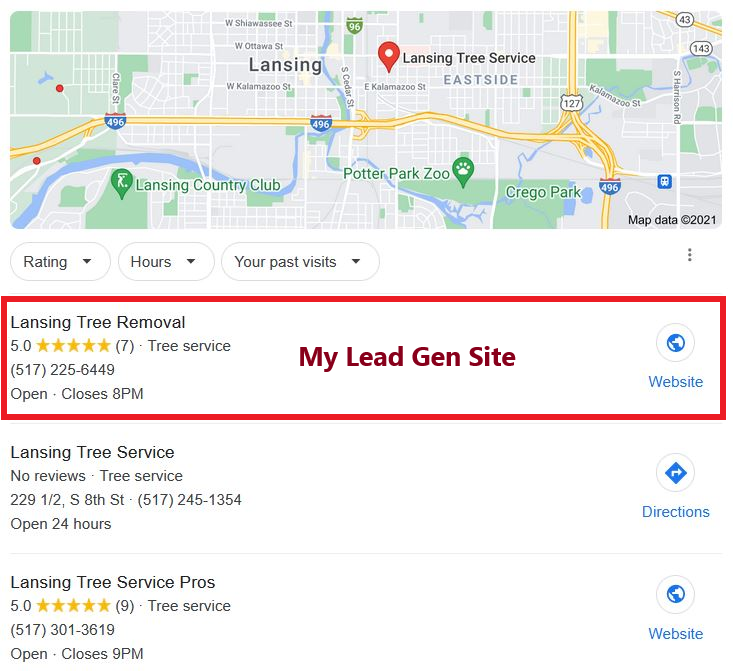
That business was local lead generation.
Now 6 years later I have over 80 pieces of digital real estate producing money for me passively, and I've been able to build multiple other businesses with that freedom of time and finances.
Imagine what you could do if you put in the time to build out enough assets to free you from your 9-5 and fund your catering business?

So even if you aren’t interested in local lead generation as a primary business model…
Lead generation is a skill, but I promise you:
Anyone can learn it.
And once you do, you’ll be able to harness the localization power of Google alongside strategic SEO, and put these things to work for your business.
If you're ready to see how local lead gen can transform your business, click here to learn more about how we can help you get started.
